
What is an API?
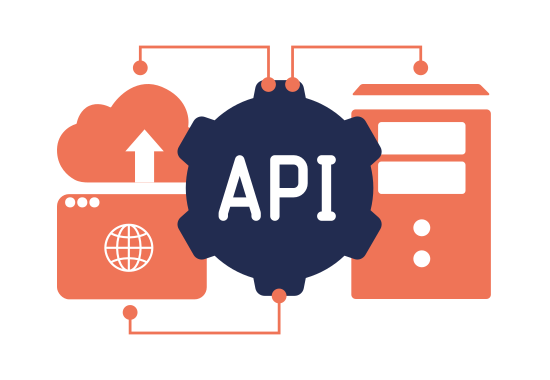
API stands for Application Programming Interface and refers to a technically defined interface that provides controlled access to the functions and data of a software or hardware system. APIs are often described as a set of rules, protocols and data types that enable programmes to interact with one another in a standardised manner. It is not necessary to be familiar with the internal implementation of the other system.
The programming interface acts as a mediation layer that receives requests, processes them according to predefined rules and provides appropriate responses. For a weather app, for example, this might involve retrieving the current weather information, but APIs can also be used for complex processes such as carrying out financial transactions.
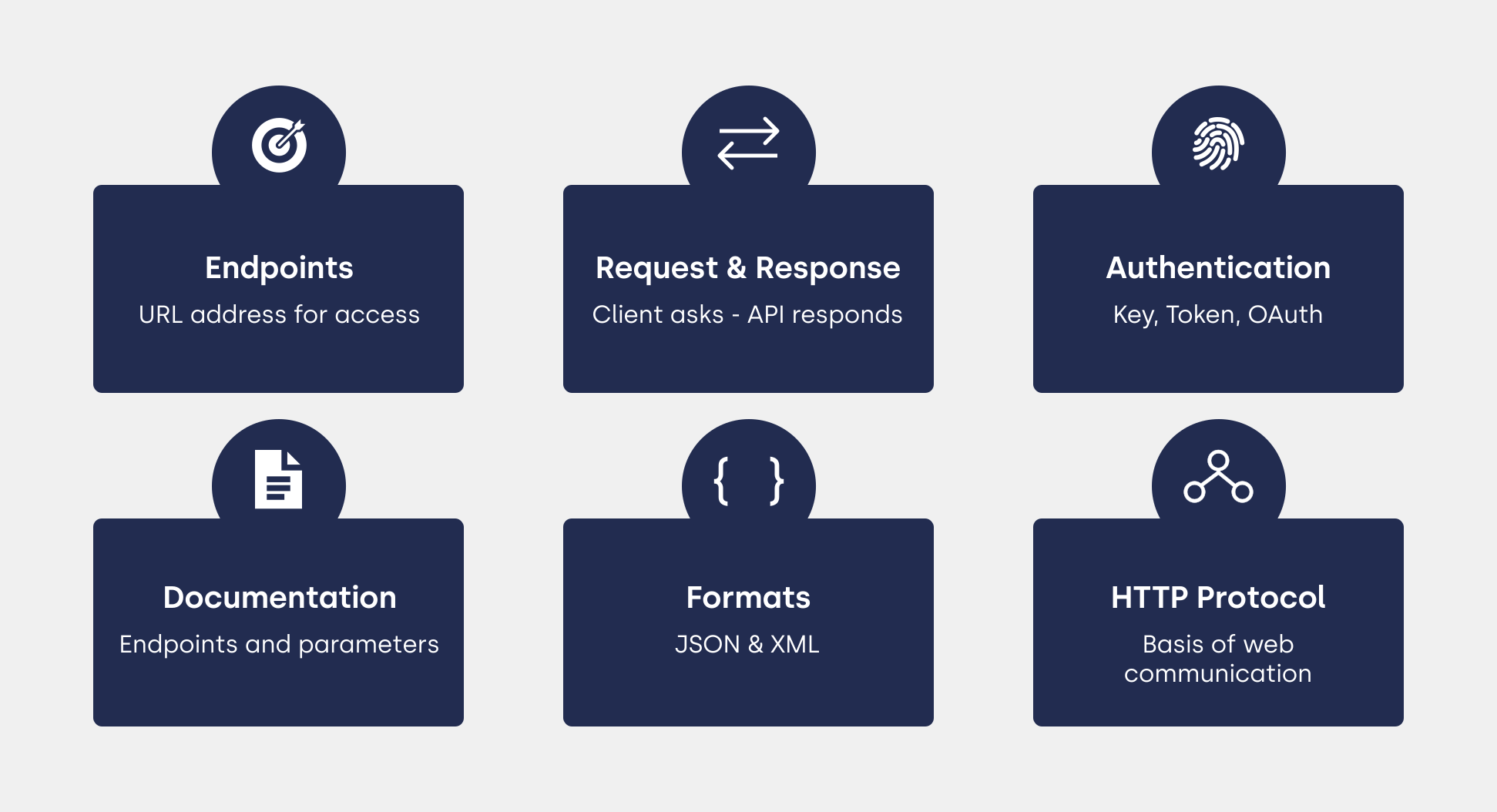
APIs allow structured and reusable access to functions and resources. Whilst the general definition of APIs remains rather abstract at first, modern web APIs can be described in practice by several typical key components:
- Endpoints: An API can be accessed via URL endpoints
- Requests and responses: APIs operate on a request-response cycle. A client (your app) sends a request to the API, and the API responds with the requested data or confirmation of an action.
- Authentication: Secure access to APIs is ensured through authentication, e.g. via API keys, OAuth tokens and other methods for verifying the client’s identity.
- Formats: Data exchange via APIs takes place in structured formats such as JSON (JavaScript Object Notation) or XML (Extensible Markup Language), as these support cross-platform interoperability.
- HTTP protocol: The HTTP protocol (HyperText Transfer Protocol) is the basis for data exchange on the web.
The API documentation provides a detailed description of how to use it, which endpoints are available, which parameters are required, and which response formats are accepted.
How does an API work?
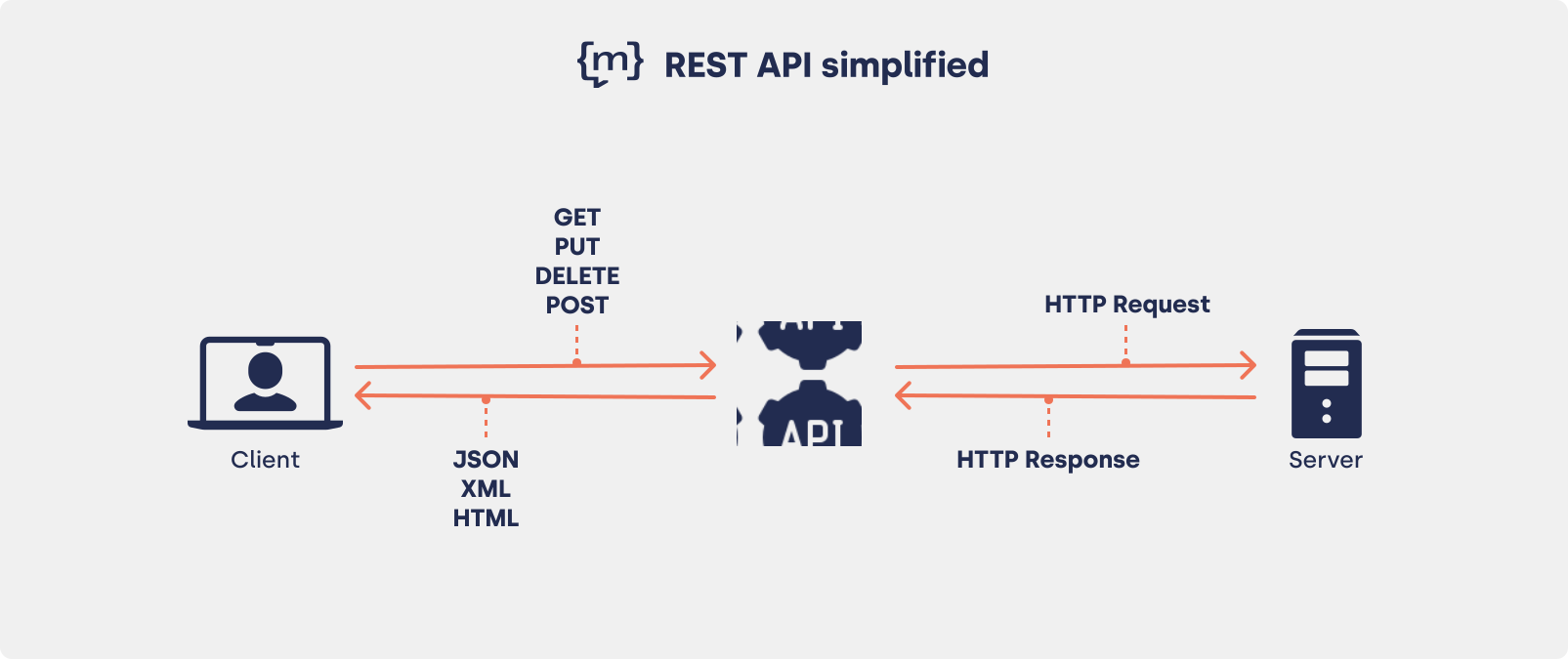
APIs in distributed systems operate on a request-response model. Communication takes place via two entities: a client (e.g. a web application or a mobile system) sends a formally structured request via a network protocol such as HTTP to a server, which receives and interprets it. The server then generates a corresponding response.
The API precisely defines which actions a client is permitted to perform and how inputs and responses must be structured so that the client can use the server without knowing its internal workings.
An HTTP-based API request typically comprises
- a method (e.g. GET, POST, PUT, DELETE),
- a destination address (endpoint),
- optional header metadata and
- a message body for application data.
Once the request has been received, the server is responsible for tasks such as parsing the message, checking prerequisites, executing operations such as database queries, and generating the standard response with a status code, headers and payload.
In practice, the communication process is secured using various authentication and authorisation procedures, ensuring that only identified and authorised clients can access defined endpoints. This also safeguards the integrity of the transmitted messages. APIs enable different software components to work together reliably and transparently, even as the load increases.
What types of APIs are there?
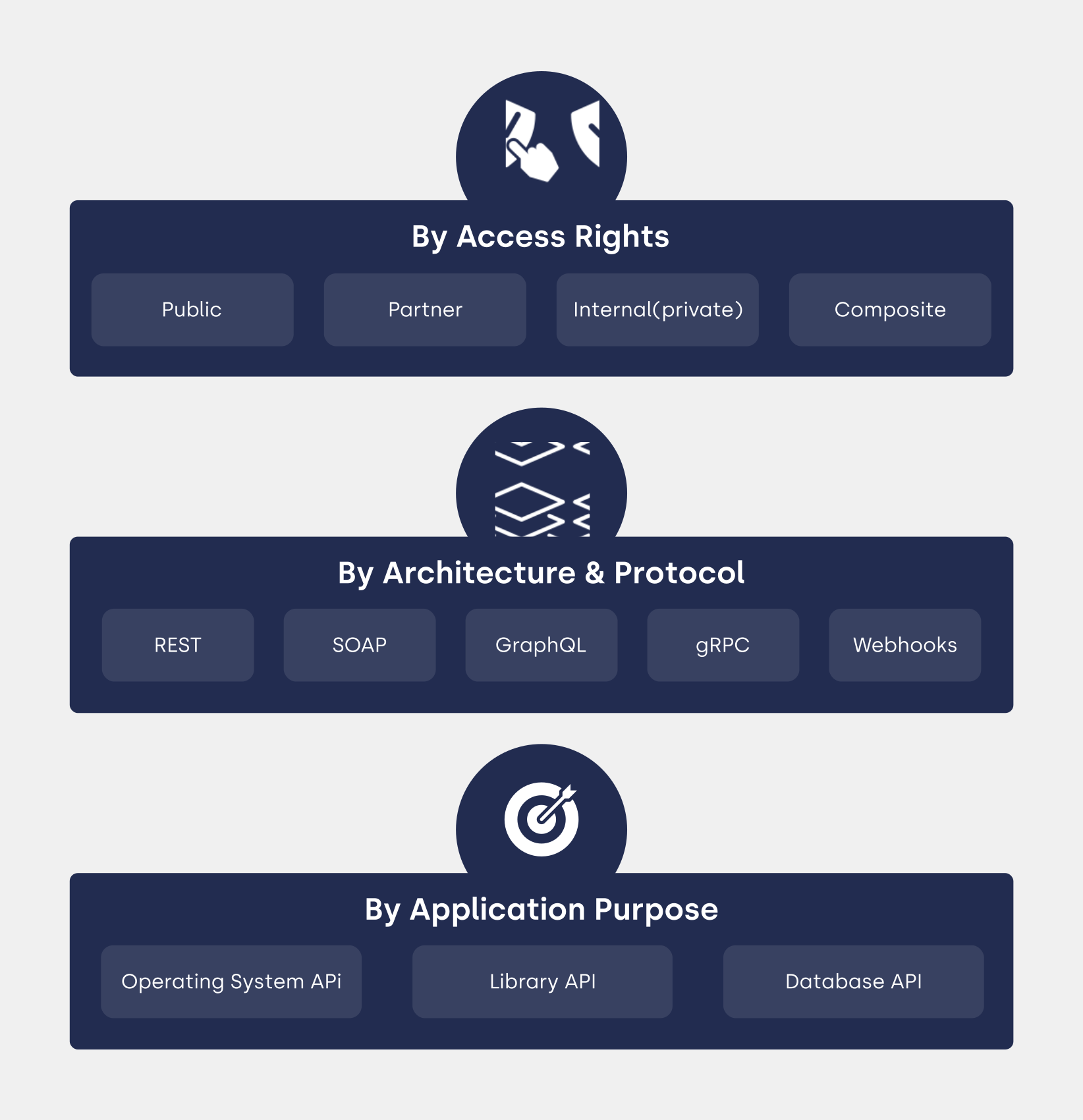
APIs are typically categorised according to their accessibility (public, partner, private), their architectural style (REST, SOAP, GraphQL, RPC) or their scope of application (data, operating system, remote APIs).
In practice, these perspectives are often combined to clearly structure interfaces and deploy them specifically for business and product objectives.
APIs by access rights
There are essentially three categories based on access rights:
- Public APIs (also known as open APIs) are publicly accessible and are frequently used for web services; examples include payment or social media integrations.
- Partner APIs provide specific access for selected, strategic business partners and support, for instance, B2B integrations governed by clearly defined contracts.
- Private APIs, or internal APIs, are used exclusively within a company to connect internal systems and boost productivity in development and operations.
- Composite APIs bundle multiple interfaces to perform related or interdependent tasks in a single call.
A classic example of a public API is the Stripe API, which is used to process online payments in online shops. The Amazon Selling Partner API is available only to registered sellers for managing orders and stock levels. An API for an internal data warehouse, used exclusively to retrieve reports via internal company dashboards, is an example of a private API. Probably the most commonly used composite API is that for travel bookings, whereby the API bundles flights, hotels and car hire from various individual services into a single combined endpoint.
APIs by architecture and protocols
Web APIs (Web Application Programming Interfaces) are currently considered the most widely used APIs in modern software development. A Web API is the actual interface through which applications such as apps and servers exchange data over the internet (HTTP) using the HTTP protocol (e.g. RESTful APIs, GraphQL). OpenAPI (OpenAPI Specification, OAS), on the other hand, refers to a standard (description language) for documenting Web APIs. Here is an overview of the most important architectural styles:
We’ve summarised everything you need to know about webhooks in our article here.
APIs by purpose
The following APIs can be distinguished by their purpose:
Operating system APIs provide operating system functions, such as for file access, network communication or process management (e.g. Windows API, POSIX).
Library APIs are provided by software libraries or frameworks and enable developers to use their functions consistently, for example in UI and machine learning.
Database APIs form the bridge between applications and database systems and ensure that queries, updates and transactions are executed and communicated in a standardised and secure manner.
Depending on the target audience and technical infrastructure, companies can select the API type best suited to the use case. Where appropriate, APIs can also be combined, depending on the strategic direction and in line with the business model. Here is a graphical summary of the API types:
What are the advantages and disadvantages of APIs?
Interfaces such as REST or GraphQL APIs save development time through reusability and enhance scalability and interoperability in microservices; however, they require complex programming and entail risks of network failure as well as the need for robust security measures. We summarise the advantages and disadvantages of APIs:
Advantages of APIs
APIs help companies save time and resources by enabling the efficient reuse of existing software functions. Developers do not need to re-implement code but can instead draw on well-defined interfaces. Furthermore, the extension of applications is supported by simple integration, which increases scalability, whilst at the same time ensuring flexibility through interoperability between applications. APIs allow access only to the necessary data packets, whilst internal systems remain protected. APIs clearly separate the requesting application from the infrastructure of the responding service and build security mechanisms directly into the entire communication process. Many systems also offer integrated authorisation options.
Disadvantages of APIs
The development and integration of APIs is often very time-consuming and complex, as it involves a significant amount of programming work. This can quickly have a negative impact, particularly when multiple APIs need to be orchestrated to cover entire business processes. Furthermore, in distributed systems, APIs are heavily dependent on network stability. Latency issues and the risk of outages are significant risks if resilience is insufficient. A further challenge is the need for API versioning to prevent client errors, as well as increased requirements for security (e.g. authentication) and maintenance.
What are well-known APIs and their areas of application?
Well-known APIs are interfaces such as PayPal, AWS or Twitter/X APIs, which connect services such as payments, cloud computing, communication and social media. Areas of application include integration, automation and data retrieval. In e-commerce, for example, APIs are used to provide an overview of stock levels.
APIs in practice
The following examples are classic use cases for APIs:
- Payment gateways such as Klarna API or PayPal API: Secure online transactions, instalment payments and invoicing – essential for Shopify shops in Germany.
- Cloud services such as AWS APIs or Hetzner Cloud API: Manage infrastructure, scale servers and store data in compliance with the GDPR.
- Social media (e.g. XING/LinkedIn API): Third-party apps post or link profiles directly – ideal for B2B marketing in the DACH region.
- Weather data (e.g. DWD Open Data API or OpenWeatherMap): Apps retrieve real-time data for logistics, events or insurance in weather-sensitive sectors.
The wide range of applications for APIs is driving digitalisation forward whilst simultaneously reducing costs within organisations. In the enterprise sector, for example, the Salesforce API can be used to integrate CRM systems and ERP processes. They enable stock synchronisation and dynamic price adjustments in retail, whilst mobile apps use them for tasks such as sending push notifications. In IoT and automation, they control devices and connect smart home systems. In data analysis, they provide real-time insights, for example via the Google Analytics API, and feed AI models.
Conclusion and Outlook
APIs connect systems and automate processes, making them essential for seamless communication between different applications, particularly in the context of e-commerce and AI. They are a key driver of innovation and significantly enhance the user experience. moinAI harnesses precisely this strength: the AI chatbot integrates via API into CRM systems (e.g. Salesforce), e-commerce platforms (Shopify) and messaging services to enable real-time support with GDPR-compliant personalisation. As AI matures and large language models such as GPT-5 and Gemini 4 emerge, APIs are evolving into Agent2Agent protocols. These enable autonomous workflows in which AI agents communicate with one another and orchestrate processes independently. Those who master APIs are thus directly shaping the future and remaining competitive.
[[CTA headline="Harness the power of APIs in customer support with moinAI!" subline="Try it out, with no obligation, to see how a smart chatbot connects your tools and automates enquiries." button="Try it now" placeholder="Enter your website"]]

.svg)