
The Future of Chatbots in Business
How chatbots must evolve to keep pace with generative AI assistants like ChatGPT and others—and even outperform them.
Generative AI assistants like ChatGPT are fundamentally changing how we search for information. For many companies, this raises an uncomfortable question: Do we even need our own chatbot anymore?
This guide provides the answer, based on a survey of over 1,150 end users and discussions with decision-makers across various industries. The result: basic FAQ bots are becoming less relevant. In contrast, chatbots that access customer data, perform actions, and handle actual processes remain in high demand.
The guide outlines the steps that determine whether a chatbot remains future-proof and shows what this looks like in practice, using TEAG and Nuremberg Airport as examples.
.avif)
Download the Guide
The future of Chatbots in Business (DE)
With practical insights from Dr. Sophie Hundertmark in collaboration with moinAI
Executive Summary
Are corporate chatbots dying out?
With the growing popularity of generative AI assistants like ChatGPT, the way people search for information is changing. Companies are therefore asking themselves whether their own chatbots are becoming obsolete. The answer is nuanced!
For general questions, most people now prefer to turn to generic AI assistants, which means that pure information and FAQ bots are noticeably losing their relevance. At the same time, it is clear that: Chatbots that access personal data, perform actions, or operate in regulated and secure environments retain their value for both users and companies.
What the numbers show
For this guide, over 1,150 users and six managers from companies in various industries were surveyed. Some key findings:
- 56% of people turn to a generic AI assistant first when they have a question about a product or service—a trend that cannot be ignored.
- At the same time, there is a clear mandate: for the respondents, a company bot is only considered useful if it can perform actions rather than just answering questions.
The tasks they expect it to handle are clear:
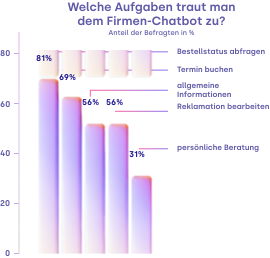
The companies surveyed confirm this internal perspective: wherever a bot recognizes logged-in users and accesses their data, the threat posed by generic AI assistants is considered low to non-existent. Uncertainty is highest where the bot only provides publicly available information.
What this means for companies
Der Chatbot als Tool im Self-Service stirbt nicht, sondern verändert sich. Was bleibt und an Bedeutung gewinnt, ist der datengestützte und handlungsfähige KI-Assistent.
The key factor is what a generic AI cannot do: access internal and personal data, securely execute transactions, and create added value within a brand-led, controlled context.
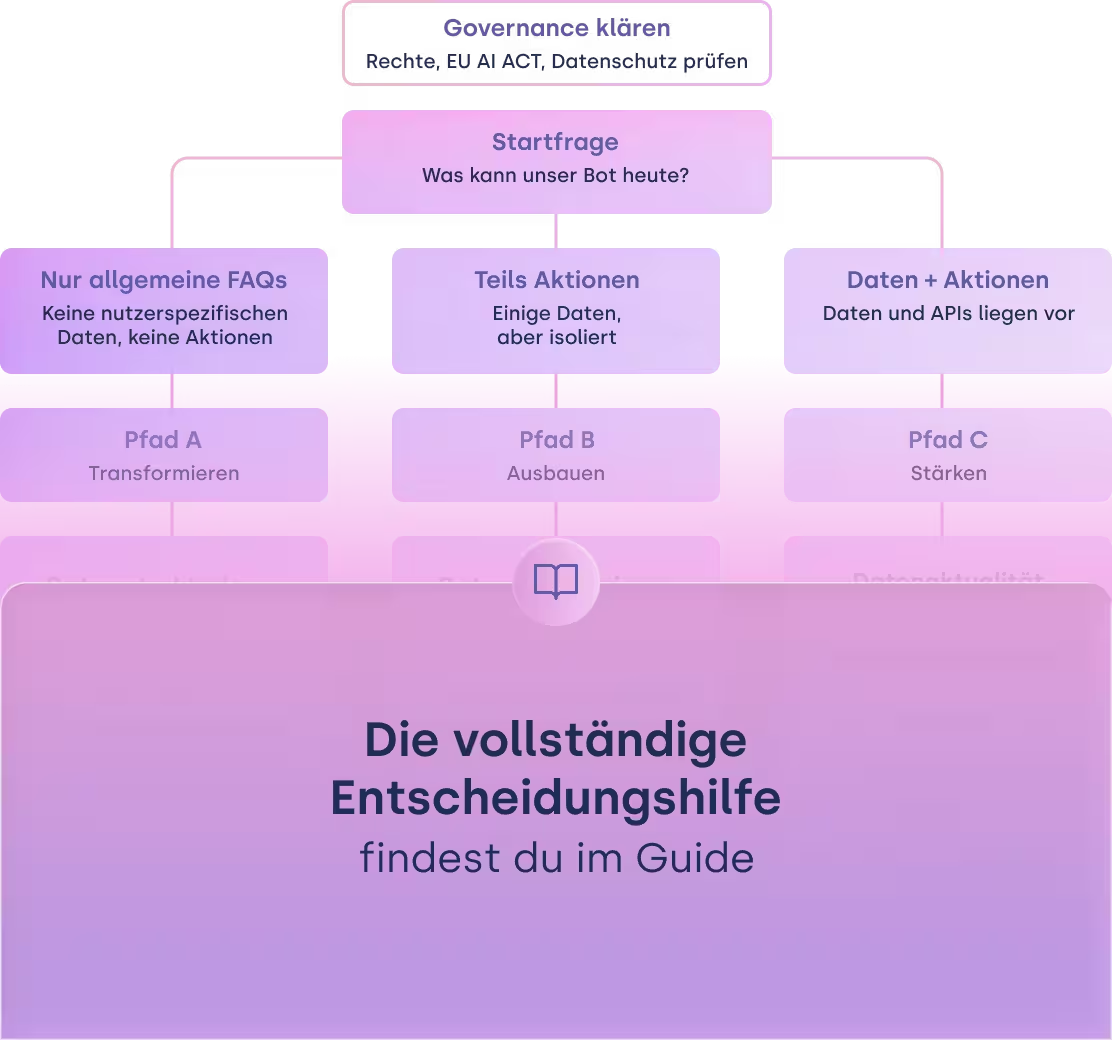
Two measures determine future viability: the structured provision of your own data and technical integration into existing systems. Which path is right for your specific case depends on what your existing chatbot is already capable of doing today.
Proven in practice
Two examples from moinAI's customer base show how this pays off in concrete terms: TEAG and Nuremberg Airport have purposefully evolved their chatbots into integrated, actionable assistants. Today, TEAG's chatbot handles over 100,000 conversations annually with an automation rate of around 90%, covering service processes such as installment adjustments and meter reading submissions. At Nuremberg Airport, a system of specialized AI agents automatically answers over 10,000 conversations per month with an automation rate of over 93%, addressing inquiries about luggage, parking, or current flight status.
The strategic conclusion
For companies, the question is therefore not "bot or no bot?", but rather "which bot, with what data foundation, what integration, and what role?". If you are still running a basic FAQ bot, you should by no means shut it down, but rather purposefully evolve it into an integrated assistant.
The complete guide provides concrete recommendations for action, the right decision-making support for your own chatbot, and detailed insights into both practical examples.
Ready for the next step?
Curious to learn more? The complete guide is waiting for you, packed with insights, practical examples, and concrete next steps for your chatbot.