


Top AI alternatives to ChatGPT in 2026
The growing popularity of ChatGPT has led to increased interest in generative AI tools. Although ChatGPT is widely used, numerous useful alternatives have established themselves on the market, as shown in the table, the best-known of which are Gemini, Claude and Perplexity. Let’s take a closer look at the alternative tools available on the market!
[[CTA headline="Looking for an AI solution for your customer communications?" subline="Experience the future of automated interaction with moinAI. Create an AI chatbot for your company website with no obligation – secure, efficient and GDPR-compliant." placeholder="Insert your company URL here" button="Try it now!"]]
How do I find the right ChatGPT alternative for my specific needs?
Not every AI is suitable for every objective, so the choice should be based on the area of application in order to avoid damaging the brand’s reputation. The choice of tool depends heavily on the area of application and could, for example, be made as follows:
- For customer service: The focus here is on EU data protection and AI-driven systems (e.g. moinAI)
- For research: Tools offering real-time web access and source citations are in demand (e.g. Perplexity)
- For coding and software: Specialists are needed to provide genuine software development support and coding functionalities (e.g. GitHub Copilot)
Among the most popular options are, first and foremost, Google Gemini, which offers comprehensive integration with Google products, as well as Microsoft Copilot for users within the Microsoft ecosystem, which is integrated into Office applications. Claude, known for its highly human-like and creative text generation, and Perplexity AI, an AI model specialising in source-cited answers, are also widely used tools.
Why open source is the answer to the problem of data sovereignty
Reliance on closed systems – so-called proprietary AI – represents a cost driver for businesses and a risk to data sovereignty. When sensitive customer data is transferred to external servers in third countries, the business loses both physical and legal control. Open-source models offer a crucial solution here:
- On-premises hosting: Models can be run in the organisation’s own cloud or on local infrastructure
- Full transparency: Unlike the ‘black box’ approach of commercial providers, the code is visible, allowing security vulnerabilities to be proactively identified and addressed
- No vendor lock-in: Companies are not exposed to price increases or sudden API changes by individual tech giants
- Customised fine-tuning: Open source allows AI models to be trained on, for example, internal knowledge databases
1. Anthropic: Claude
Claude is an AI tool developed by Anthropic, a security lab founded by former OpenAI employees. The AI handles conversational tasks with a high degree of reliability. According to benchmarks such as SimpleQA, Claude models are less prone to hallucinations than ChatGPT and are more likely to leave questions unanswered when uncertain. Claude is available in several model versions, currently Opus 4.8 for complex strategies and Sonnet 5 for day-to-day operations. Thanks to its Constitutional AI, Claude remains a particularly stable model for data-sensitive sectors. In independent benchmarks, Claude models show a lower tendency to hallucinate, as they are more likely to provide no answer when uncertain rather than to guess.
The new generation has marked the leap to autonomous process control. Thanks to the Model Context Protocol (MCP) and a powerful Files API, the AI acts as a strategic agent that plans complex tasks, executes code natively and remembers global contexts. This eliminates inconsistent responses and enables the automated execution of entire business processes. You can find more information about MCP in our article.

2. Google: Gemini
In 2026, Google is positioning itself as a key provider of AI applications with Gemini. Google is seamlessly integrating its multimodal models into the entire Cloud and Workspace ecosystem. This enables productive use of AI, from individual users right through to large enterprises. The top-of-the-range model currently available, Gemini 3.6 Flash, combines all the capabilities of the series to date and is characterised by high speed alongside strong coding and agent capabilities. The even more powerful Gemini 3.5 Pro, with a context window expanded to 2 million tokens and ‘Deep Think’ reasoning, has already been announced. All models are based on a large language model, with each version featuring improved capabilities for multilingualism, reasoning and coding. Thanks to their multimodal nature, text, audio, video and code are all supported.
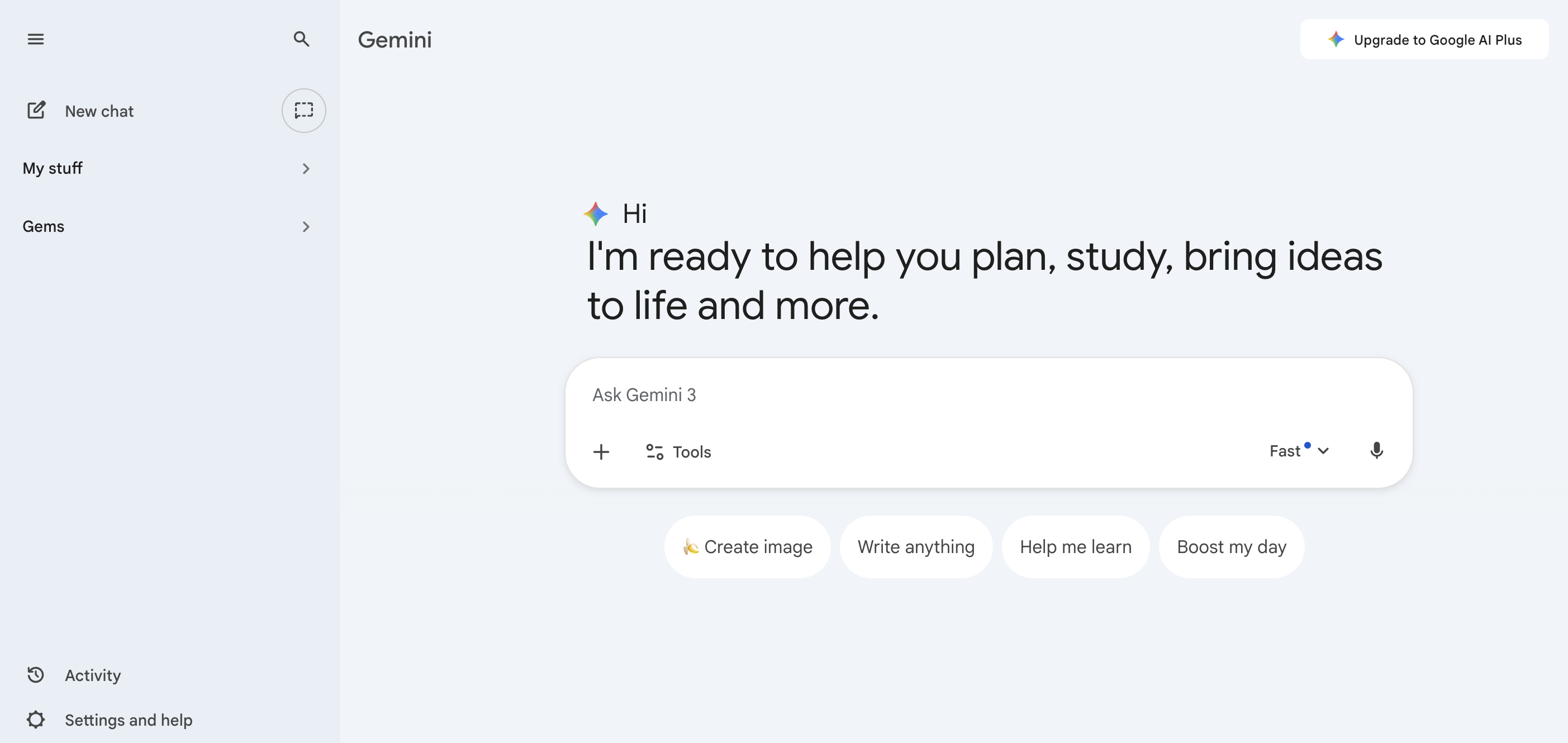
As of 2026, Gemini is available worldwide in over 230 countries and in more than 70 languages, including German. Google offers various subscription models: a free version with basic features, as well as paid tiers (Google AI Plus, Pro, Ultra) with extended access to more powerful Gemini models, optimised for complex tasks, deep research features and agent-based workflows. Google AI Ultra is the high-end package offering maximum computing power, the specialised coding agent Jules, and prioritised access to the most powerful infrastructure.
3. MetaAI
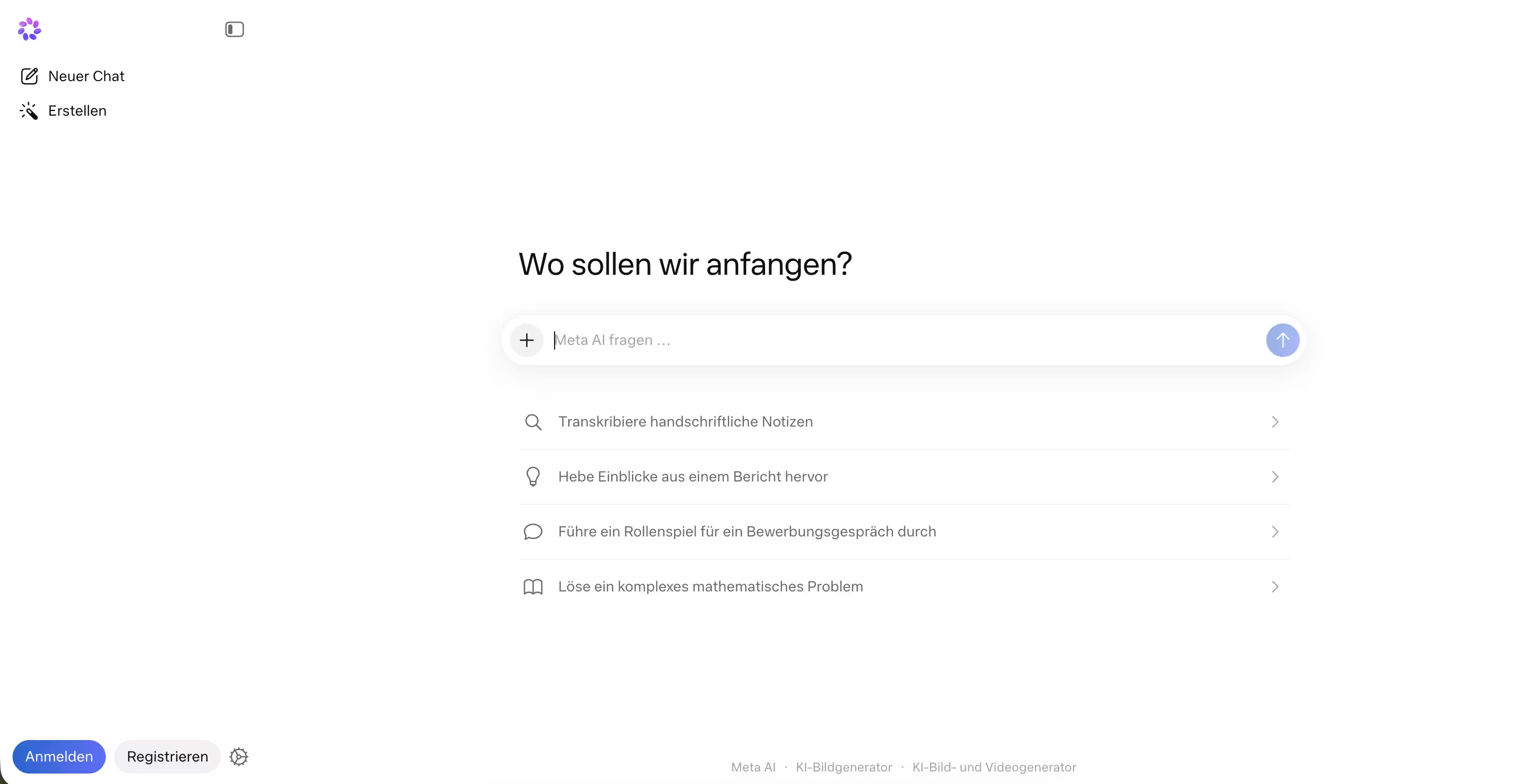
Meta AI is Meta’s AI assistant, based on its own Llama model series (currently Llama 4). The main difference compared to ChatGPT is that Meta AI is integrated directly into WhatsApp, Instagram, Facebook and Messenger. No separate login or switching between apps is required. For anyone already using Meta’s ecosystem, this therefore offers a low-threshold AI alternative. Since March 2025, Meta AI has been available in Germany and over 40 other European countries, completely free of charge, in more than 40 languages.
Meta AI can answer questions, summarise chat messages, draft texts and suggested replies, analyse and edit images, generate AI-generated images directly within the chat, and provide recommendations (e.g. restaurants for the whole group). However, unlike Claude or ChatGPT, it lacks specialised agents for tasks such as coding and enterprise/API functions for businesses, and it lacks depth when it comes to complex analysis or research tasks. Caution is advised with regard to data protection: complete deactivation is not yet possible, and since December 2025, Meta has been using chat histories, amongst other things, in some regions to personalise adverts and recommendations.
4. Microsoft Copilot
Copilot is an AI productivity platform deeply integrated into Microsoft 365. This makes it easier to carry out research and analyse data directly within Word, Excel, Outlook and Teams. ‘Copilot Pages’ also provides an interface for collaborative work, where chat results can be converted into editable content. The system uses multi-model routing to draw on multiple model sources based on context, including OpenAI’s GPT-5.5, Microsoft’s own MAI model family (including the reasoning model MAI-Thinking-1) and, since June 2026, Claude from Anthropic. Thanks to internet access, the bot provides accurate answers to questions on current topics. Of particular note is the on-device AI for Copilot+ PCs, which enables local text processing without an internet connection. Copilot requires a Microsoft account and is available free of charge or as a subscription service (Copilot Pro for personal users, Microsoft 365 Copilot for businesses) with advanced features.

5. PerplexityAI: Perplexity
Perplexity is an AI research tool that combines web search with language models and provides answers alongside the source references. Unlike ChatGPT, the focus is less on creative writing and more on accurate, real-time information retrieval.
In 2026, Perplexity is an intelligence platform – a hybrid of a search engine and a chatbot – designed for fast, verifiable research. Subscribers can choose flexibly between the in-house Sonar family and models from OpenAI, Anthropic, Google and xAI. The Sonar Deep Research feature analyses hundreds of sources within minutes and generates comprehensive reports that can be downloaded as PDF files. This is ideal for complex analyses in finance or technology. The company’s own AI browser, Comet – which has been free since March 2026 – rounds off the ecosystem.
The Free plan offers unlimited basic searches and limited access to Pro Search. The Pro and Max plans are aimed at frequent users of AI and unlock unlimited Pro Searches, daily Deep Research queries and access to advanced models. Two Enterprise plans are available for businesses, offering higher Deep Research quotas and dedicated support. This makes Perplexity an ideal tool for fact-based research.

Fancy some more information? In the article ‘Perplexity or ChatGPT’, we compare the two tools in detail.
6. Mistral AI: Vibe (formerly Le Chat)
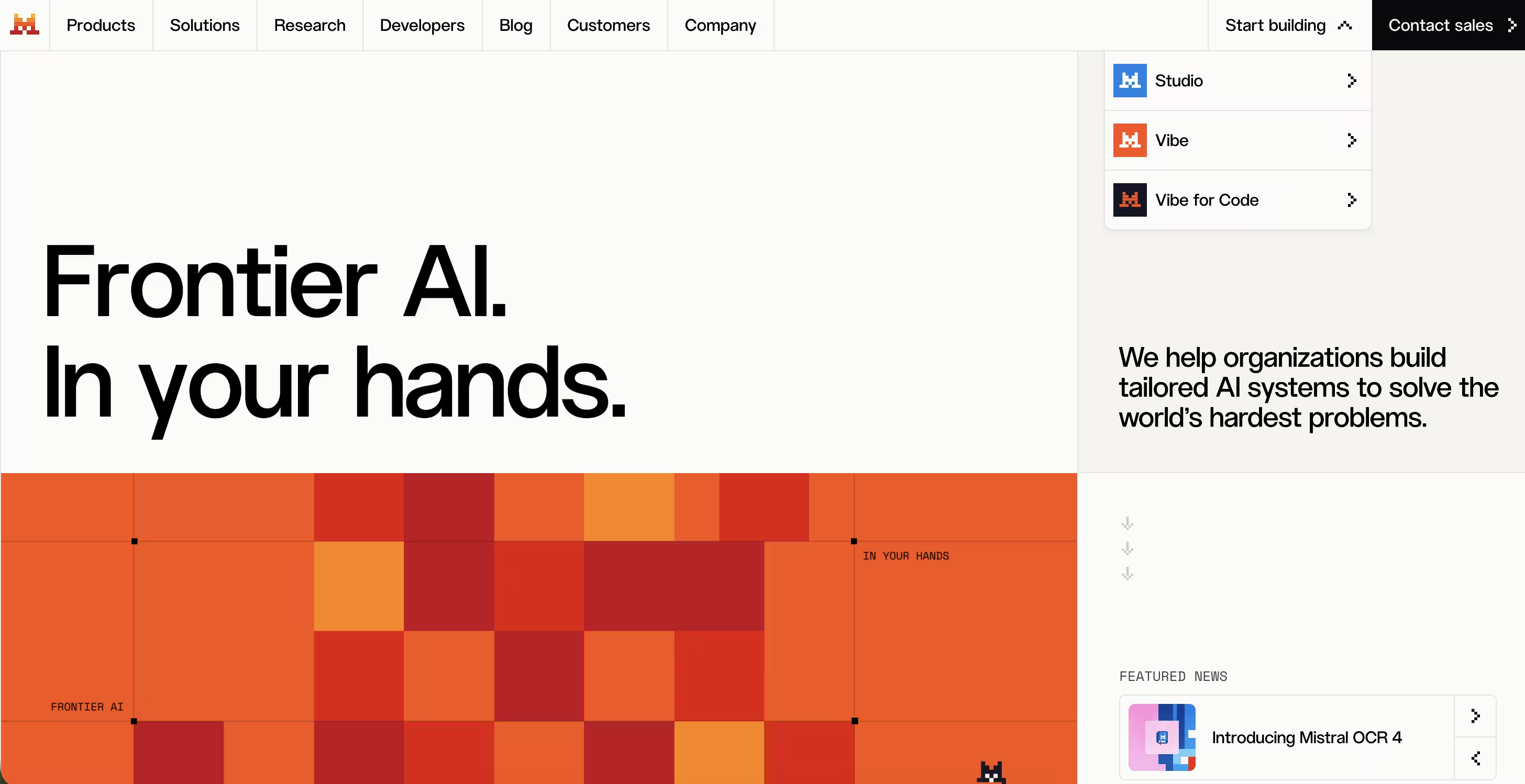
Vibe is the AI assistant developed by the French company Mistral AI, which was founded in 2023 by former Google DeepMind and Meta researchers. The key difference compared to ChatGPT is that Mistral operates its infrastructure entirely within the EU and is therefore directly subject to the GDPR, a decisive factor for companies with strict data protection requirements. In addition, Mistral releases some of its models (including Mistral Small and Codestral) as open source under the Apache 2.0 licence, meaning they can also be run on users’ own hardware.
Since its rebranding, Vibe has been divided into three modes: Vibe Chat for standard conversation, Vibe Work for multi-step tasks with integration with Google Workspace, Outlook, SharePoint, Slack and GitHub, and Vibe Code for autonomous programming, including the creation of pull requests in cloud sandboxes. Image generation is currently still handled through a partnership with Black Forest Labs (Flux). It should also be noted that, for highly complex reasoning tasks involving many intermediate steps, Mistral Medium is considered to be slightly weaker compared to Claude Opus or GPT-5.6. The plugin and app ecosystem is also significantly smaller than that of ChatGPT. Vibe can be used via the web app chat.mistral.ai, the mobile app (iOS/Android) or, for developers, via the “La Plateforme” API. A free plan is available, whilst subscription plans start at around €15 per month.
7. xAI: Grok
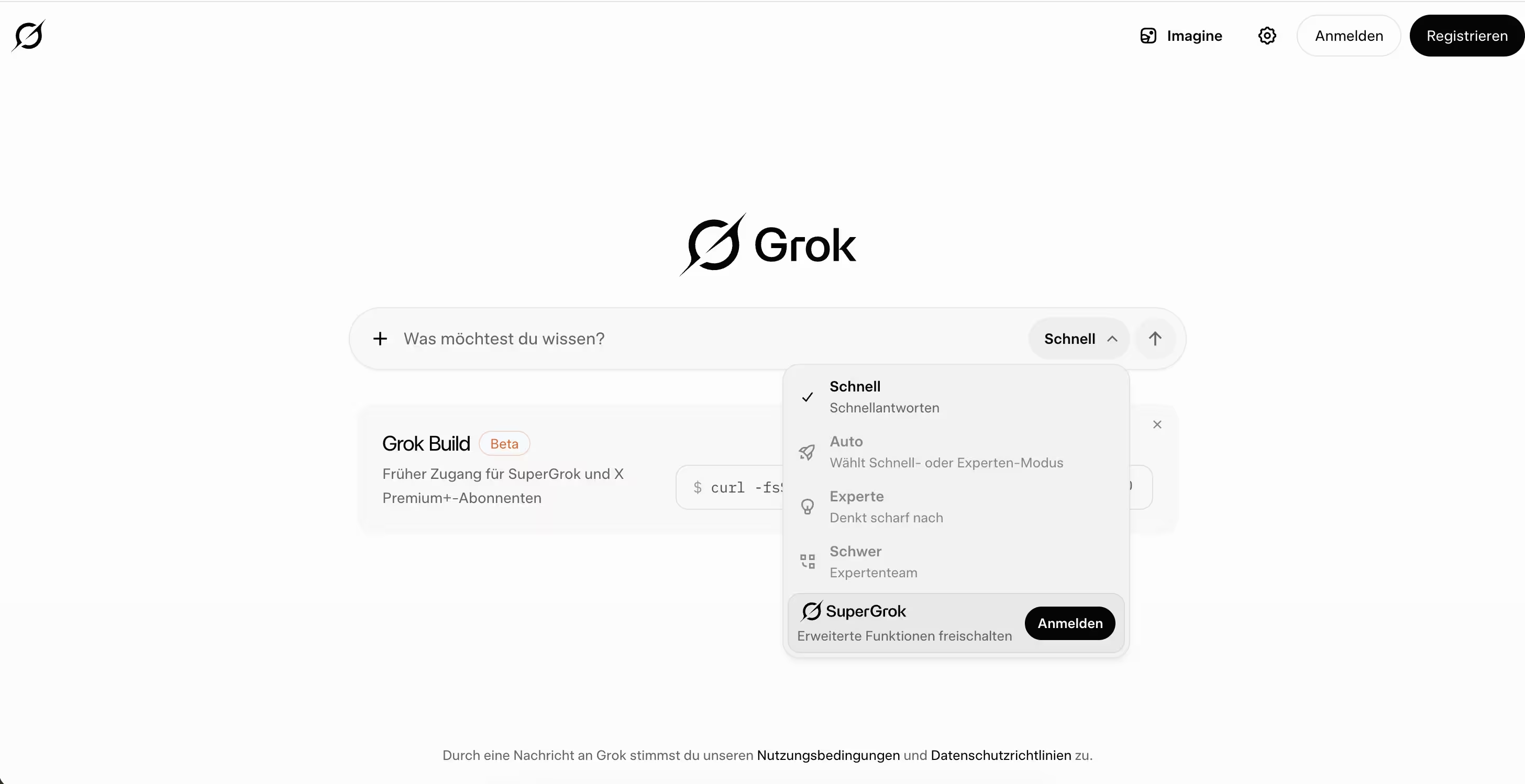
GrokAI is a language model developed by xAI that has been trained on a mix of publicly available data and real-time information (via X/Twitter). It is characterised by direct, often sarcastic or humorous responses and is explicitly positioned as an alternative to ChatGPT. The focus is on transparency and efficiency, rather than ‘political correctness’. Grok is frequently the subject of public debate, more so than many other AI assistants: its close integration with X and data from the network, its aim to be as unrestricted as possible, and the high level of public attention surrounding xAI and Elon Musk have drawn sharp criticism, particularly in the EU, whilst xAI also repeatedly raises data protection concerns and faces allegations of hallucinations.
Users who prefer quick, uncensored answers and rely on real-time data from the X ecosystem can therefore make good use of this tool. For scientific depth or specialised tools (e.g. image generation), however, other models are significantly better suited. Grok can be used via the official website grok.com (beta) or as a premium feature within X; developers can also request AOI access.
8. DeepSeek
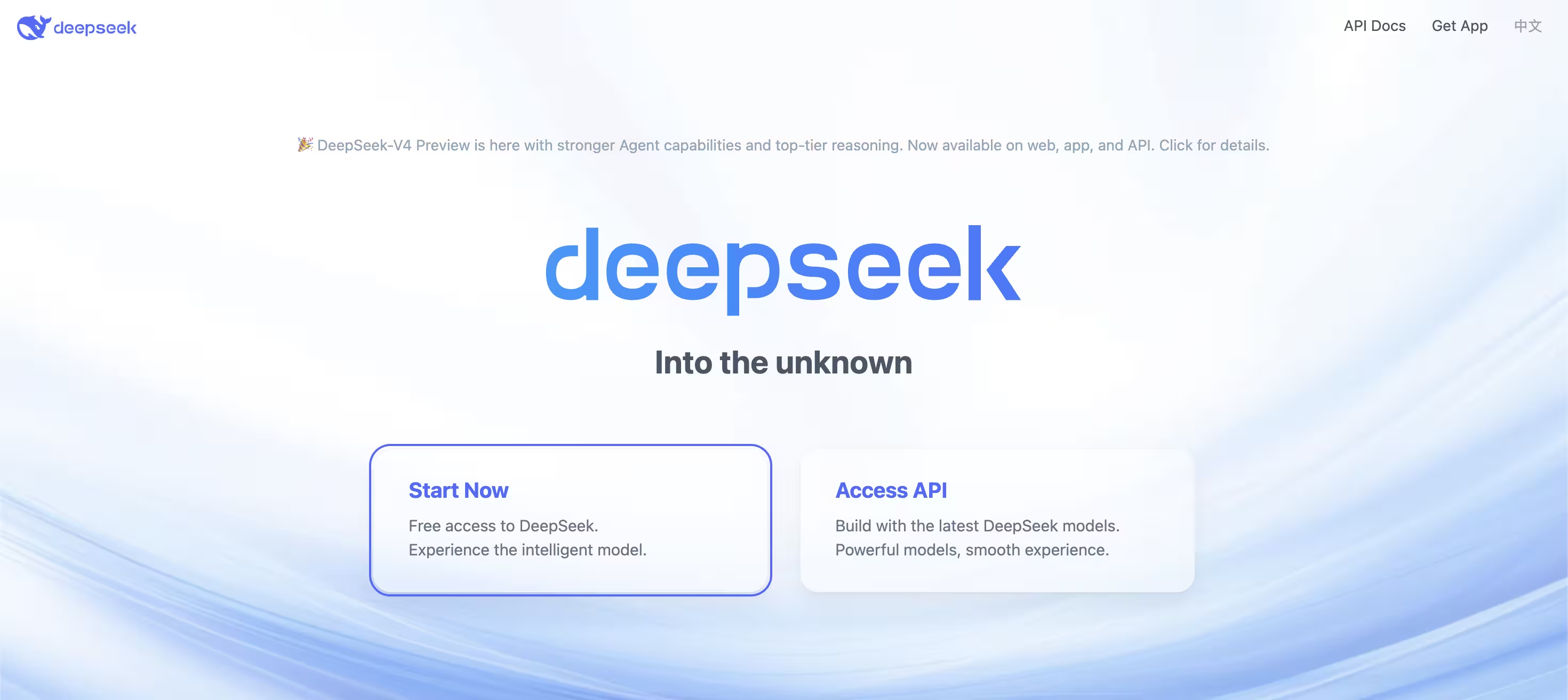
DeepSeek is a Chinese AI company specialising in particularly efficient open-weights models. The models utilise architectural approaches such as MLA (Multi-head Latent Attention) and are optimised for high efficiency at comparatively low cost. The model families include further developments of the DeepSeek-V series, as well as reasoning-oriented variants optimised for complex inferences and mathematical tasks.
In benchmarks, these models often rank among the top open-source and open-weights systems and can compete with proprietary systems in certain task areas, though they do not consistently match their performance. DeepSeek is known for its highly cost-effective API infrastructure and is frequently used as an alternative for scalable AI applications, particularly where cost per token is a key consideration.
9. moinAI
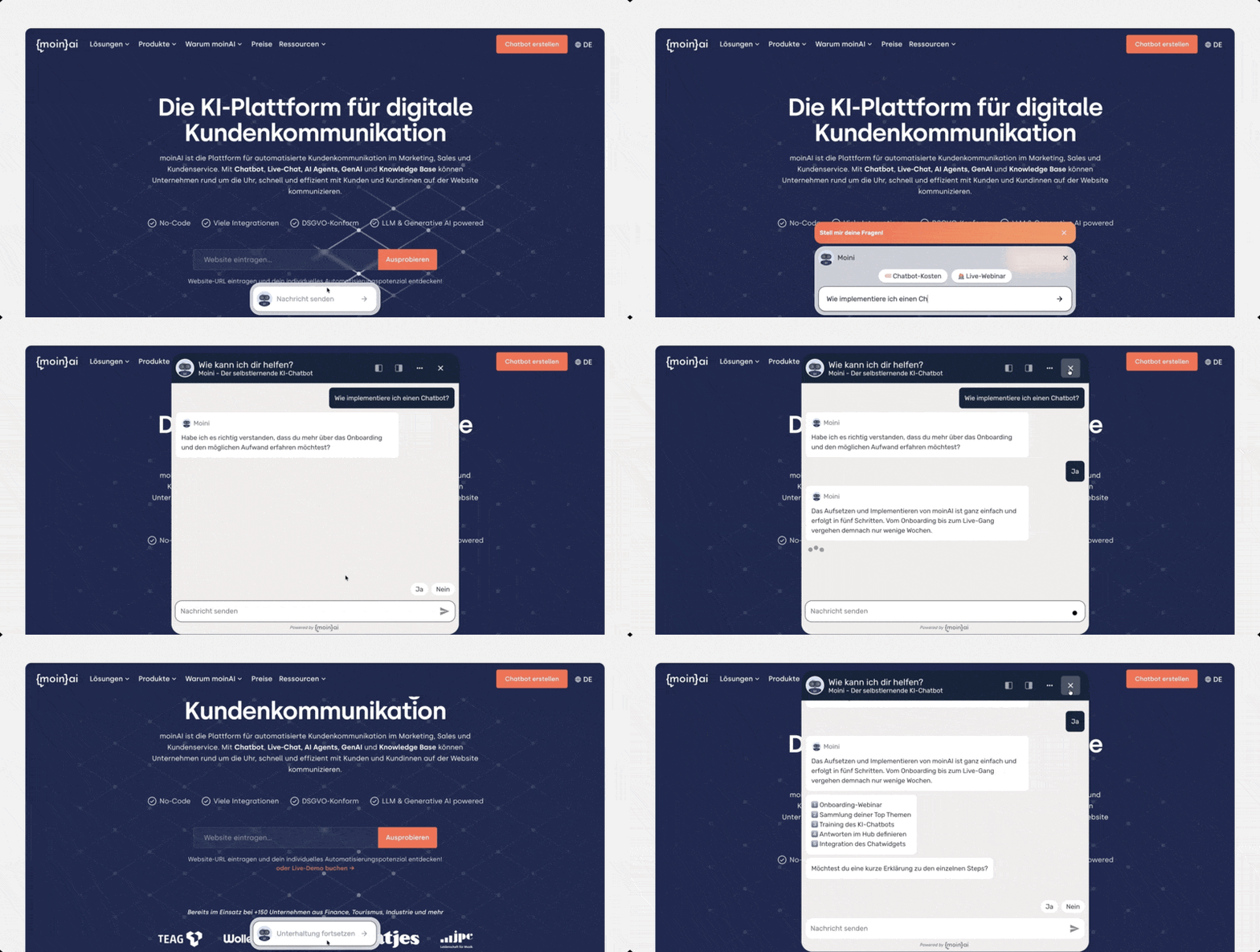
moinAI is a leading AI-based chatbot platform from Germany that offers AI solutions for customer communication. The company was founded in Hamburg in 2015/2016 and helps businesses make efficient use of AI chatbots, product advisors and live chat for customer service, marketing and sales. Whilst ChatGPT is a general-purpose AI chatbot for a wide range of applications (text generation, coding, research, creative tasks), moinAI, as an enterprise solution, specialises in automating customer enquiries, generating leads and optimising support processes. The benefits include:
- Self-learning: the chatbot’s autonomous development
- Comprehensive integration with CRM, ERP and e-commerce systems
- GDPR-compliant EU hosting
- Multilingual support (98 languages)
- No-code editor for easy customisation
moinAI is not a direct replacement for ChatGPT, but rather an industry-optimised AI solution, particularly for the DACH region, with a focus on data protection and integration into existing systems.
10. GitHub Copilot
GitHub Copilot is an AI-powered assistant for software development that can be integrated directly into development environments, such as Visual Studio Code, JetBrains IDEs or Neovim. It helps with writing and revising code and works with many popular programming languages, such as Python, JavaScript, TypeScript, Java, C++ and Go.
Over the years, Copilot has evolved from a simple autocomplete tool into a sort of ‘co-developer’ within the editor. As well as offering traditional code suggestions, it provides chat functions within the context of the project and can assist with refactoring larger sections of code or entire files. Technically, depending on the product configuration, Copilot is based on various large language models from the OpenAI ecosystem and is sometimes supplemented by additional models in enterprise environments. Which specific models are running in the background is usually not visible to users and is controlled via the platform.
Copilot is available as a paid product, with a limited free version as well as discounts for students and open-source contributions. The tool is now used by many development teams to speed up routine tasks.

10 more Alternatives to ChatGPT
The candidates listed above represent just a selection of the wide range of AI tools available on the market. Additional providers offering alternatives to ChatGPT and the options mentioned previously are listed here briefly. Here are 10 more helpful tools, including details of their functions and the models they use:
Free ChatGPT alternatives that don’t require registration
(Last updated: June 2026)
Some AI chat services can still be tried out directly in the browser without having to create an account straight away; however, the range of features is usually limited, though it is sufficient for simple questions or research.
- Perplexity AI and Claude offer a web-search-based chat interface, the basic version of which can be used without logging in.
- Mistral “Le Chat” (Mistral AI) also allows users to get started quickly in their browser. Depending on the current product configuration, individual models such as Mistral Large or new multimodal variants can sometimes be tested without registration.
- DeepSeek occasionally offers direct access to chat models from the newer V and Reasoning families via its web interface. However, availability without logging in is not guaranteed at all times.
- Microsoft Copilot can be used on the web and in Windows without logging in in some cases, particularly for simple prompts.
However, without logging in, there are typically three restrictions: the models are less powerful or have limited functionality, there are limits on the number of messages or usage quotas, and there is no history or personalisation. Logging in significantly improves quality and the range of features, particularly for longer-term projects or integrated workflows.
Conclusion
The wide range of alternatives to ChatGPT available allows users to try out AI tools for various use cases and choose the one that best suits their requirements. AI has evolved from an experimental gadget into business-critical infrastructure. Models such as the latest GPT and Claude generations, as well as comparable systems from other providers, are increasingly designed for complex, multi-step tasks and to support entire workflows.
At the same time, pressure is mounting from open-weight and open-source-style models such as DeepSeek or the Llama family, which score highly – particularly in the corporate environment – thanks to their flexibility and greater control over data. As a result, the market is increasingly shifting towards specialisation rather than sheer model size. However, generic chat models alone are not sufficient for use in customer communication, as they are only of limited reliability without additional control mechanisms. Furthermore, specialised solutions guarantee the necessary depth of integration that generic models often cannot provide.
Solutions such as moinAI address this specifically, combining AI functionality with clearly defined workflows and data control. The focus lies on consistent and business-relevant responses in the context of marketing, sales and customer service.
[[CTA headline="Lost in all the tools? Try using moinAI" subline="Try out how AI based solutions work on your website, with no obligation." placeholder="Insert your company URL here" button="Try it now!"]]

.svg)


